
AI strategy
The Ending I Forgot for John Henry & an Example of a Jevons Paradox
John Henry proved a person could beat the machine, and it cost him everything. The railroads that followed show a Jevons paradox at work, and why cheaper AI means more work worth doing.
Key takeaways
- John Henry proved a person could beat the machine. It cost him everything, and that kind of work ethic is not sustainable.
- Machines made laying rail faster and cheaper. That did not make railroads irrelevant; it made more railroad projects practical.
- When the cost of doing something falls, people find more reasons to do it. That is the Jevons paradox.
- As AI gets cheaper, tasks that were too small or too expensive to justify start to make sense.
I recently listened to the story of John Henry again, and it hit me differently this time.
I highly recommend the version narrated by Denzel Washington, with music by B.B. King.
There is something powerful about the pride at the center of the John Henry story.
The pride of building something with your own hands.
The feeling of looking back at the end of the day and seeing what you made. What you moved. What exists now because you were there.
John Henry represented that pride.
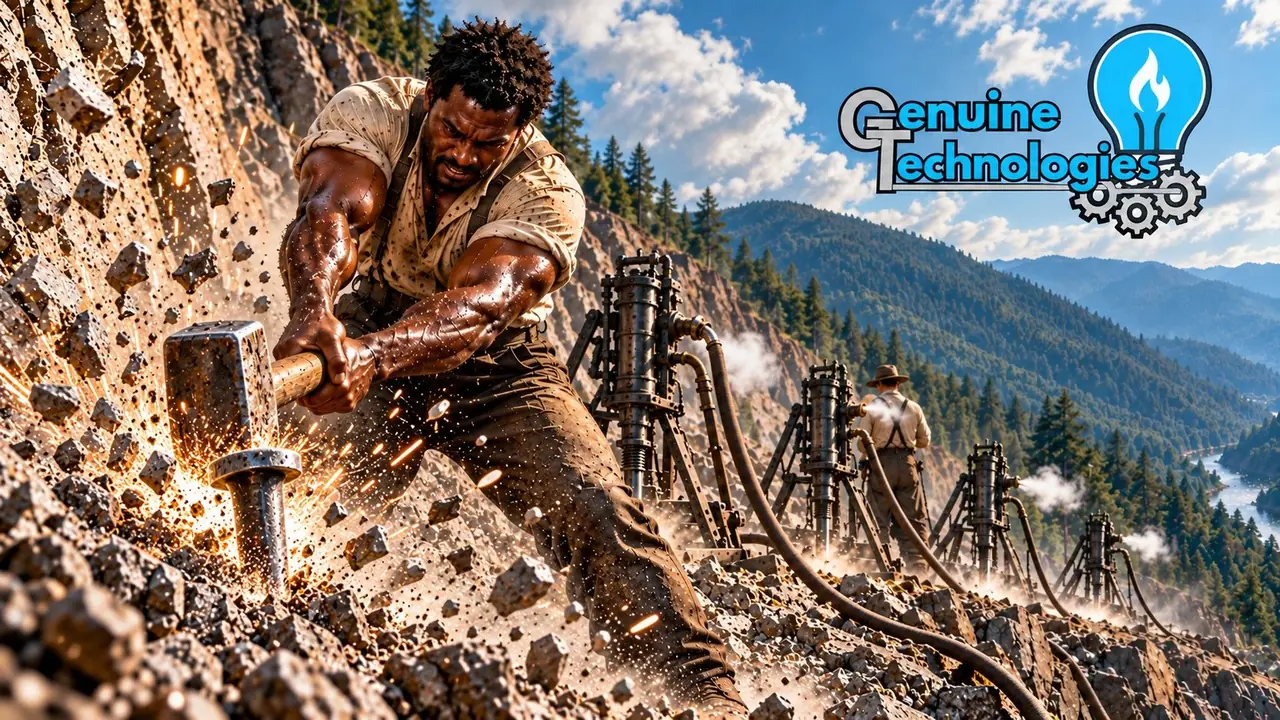
He was the man who could drive more rail, build faster, and even beat the machines brought in to replace the work he did by hand.
And he won!
John Henry beat the machine.
The ending I forgot
But there is one part of the story I don’t remember hearing much as a kid.
John Henry died with his hammer in his hand.
Maybe that part didn’t make it into many children’s versions of the story. But it changes the lesson.
John Henry proved that a person could beat the machine.
It just cost him everything.
That kind of work ethic isn’t sustainable. Most of us know that.
More railroad, not less
After John Henry, the machines kept spreading.
Rail drivers became rail operators. Work that once required several people on one rail line could now support work across several lines. Railroads could be built faster and at lower cost.
That mattered far beyond the people laying track.
More railroad meant more transportation routes. More routes opened more places to trade and do business. Cheaper transportation made it practical to move more goods over greater distances.
The train itself was obviously important to commerce. But so was the ability to build the railroad quickly enough and cheaply enough to make a large rail network practical.
Once building rail became cheaper, rail could also solve smaller transportation problems. A company could use it to move material only a few miles between its own plants when that became faster and cheaper than the previous option.
When the cost of doing something falls, people usually don’t stop doing it.
They find more reasons to do it.
The same pattern with AI
We have seen that pattern in industry and technology, and we’re seeing it with AI now.
TypeSafe AI’s new model, Jev, made a lot of news because of the value it offers for the cost.
Its job is simple. It can decide the next action or categorize a topic without producing a long explanation or visible thought process for the user. It gets from question to answer using as few tokens as possible.
A large amount of AI work looks exactly like that.
If Jev can make those tasks significantly cheaper, then more people can afford to use AI for them. Tasks that were previously too expensive or too small to justify suddenly start to make sense.
And when something becomes cheaper to use, people often use more of it.
That idea is known as the Jevons paradox, which is what Jev was named after. The economist William Stanley Jevons described it in 1865, in The Coal Question: as steam engines got more efficient with coal, Britain did not use less coal. It used more.
The railroad story gives us an easy way to see it.
Machines made laying rail faster and cheaper. That didn’t make railroads irrelevant. It made more railroad projects practical.
AI can work the same way.
If the cost of completing a task falls far enough, we don’t simply save money on the tasks we already do. We start doing tasks that previously weren’t worth doing at all.
More ideas become practical.
More problems become affordable to solve.
More people get access to tools that used to cost too much.
So maybe the most interesting question in the John Henry story isn’t whether a person can beat the machine.
John Henry already answered that.
The better question is: why are we so determined to fight a tool that can help us build more?
Find the work that just became worth doing
As AI gets cheaper, small jobs that never justified the cost start to pay for themselves. Orbit AI Helper puts AI to work inside the software you already use. Schedule a consultation to see which of your tasks are next.
Sources and further reading
- e-WV, The West Virginia Encyclopedia: John Henry: https://www.wvencyclopedia.org/entries/336
- W. Stanley Jevons, The Coal Question (1865), Online Library of Liberty: https://oll.libertyfund.org/titles/jevons-the-coal-question
- TypeSafe AI, Introducing System One Models & Jev: https://typesafe.ai/blog/introducing-system-one-models-and-jev
- John Henry, narrated by Denzel Washington with music by B.B. King: https://www.amazon.com/dp/B0GLP4WXF4
